Digital Transformation and Packaging Constraints in 2026
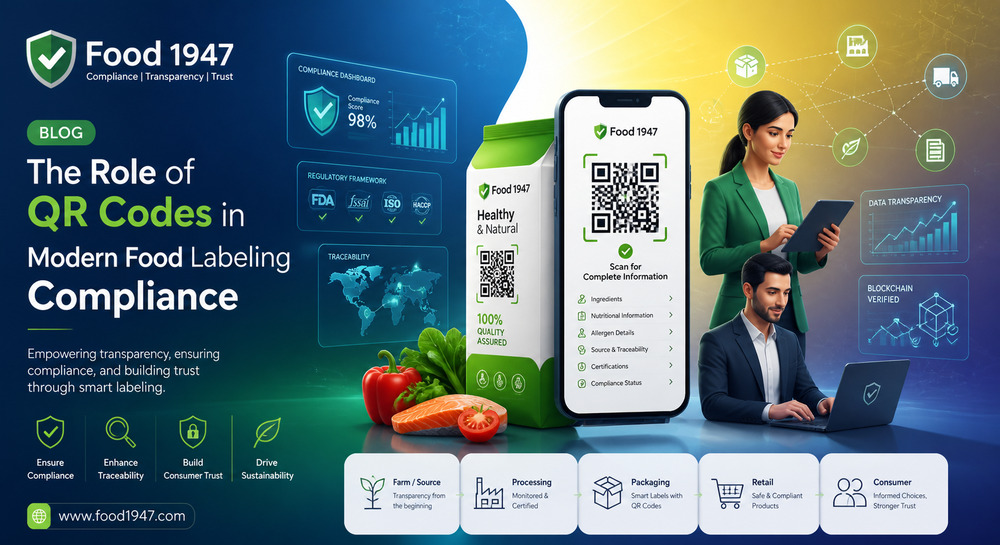
The integration of Quick Response (QR) codes into modern food labeling marks a pivotal shift in the Indian food industry as of 2026. With packaging space increasingly limited by mandatory regulatory declarations like the FSSAI logo, Fortification symbols, and detailed allergen warnings, manufacturers are facing a "real estate" crisis on their labels. To address this, FSSAI has championed the use of QR technology as a gateway to an extended digital label. This movement impacts the industry by requiring a shift from static printing to a dynamic digital ecosystem where information can be updated without reprinting thousands of packages. FSSAI’s role is critical in ensuring that these digital links are not used as marketing loopholes but as legitimate safety tools, providing the public with instant access to nutritional profiles, sourcing origins, and sustainability data that simply cannot fit on a standard pouch. Food industry leaders are now helping business operators by providing integrated digital solutions that link production ERPs directly to consumer-facing landing pages. This level of transparency is essential for building trust, especially in the nutraceutical sector where potency and purity are paramount. Key stakeholders include Food Business Operators (FBOs), packaging designers, IT service providers, and consumer advocacy groups. Compliance with the 2026 advisory on QR codes emphasizes that while these are voluntary for some categories, they are rapidly becoming a market expectation. Industry players are advised to ensure their landing pages are mobile-responsive and ad-free to maintain regulatory integrity.
Inclusive Labeling and Accessibility for the Visually Impaired
In 2026, the push for QR codes is deeply rooted in social inclusivity, particularly addressing the needs of the visually impaired. FSSAI issued a landmark advisory in March 2026 urging food manufacturers to adopt scannable codes that allow screen readers to vocalize critical safety information like ingredients, allergens, and dates. This impacts the Indian food industry by necessitating a design overhaul that accommodates high-contrast, easily scannable QR codes on the front of the pack. FSSAI’s primary objective here is to serve the public by making food safety information accessible to every citizen, regardless of their physical abilities. The industry helps business operators by standardizing the digital architecture required to host this data, ensuring that a "voice-enabled label" becomes a reality for millions of Indian consumers. Key stakeholders involved in this transition include accessibility experts, disability rights organizations, and large-scale FMCG manufacturers. Additional insights emphasize that this is not just a social responsibility but a looming regulatory requirement under the broader interpretation of the "Right to Information." Compliance ensures that brands are viewed as empathetic and socially responsible, which is a major factor in brand loyalty in 2026. The food industry is advised to prioritize the placement of these codes in a consistent location on the package, such as the bottom-right corner, to help users find them easily. This forward-thinking approach to labeling represents a new era of consumer protection in India.
Enhancing Batch-Wise Transparency and Traceability
In the 2026 landscape, QR codes are the backbone of a new era of food traceability and batch-wise transparency. Unlike static labels, a dynamic QR code can reveal specific data about the exact batch of food in the consumer's hand. This impacts the industry by forcing a move away from generic "one-size-fits-all" information to precise, real-time data reporting. FSSAI’s role is to act as the ultimate arbiter of this data, ensuring that the traceability information provided by the QR code is accurate and verifiable against the manufacturer's internal logs. This serves the public by allowing them to check the "Farm-to-Fork" journey of their products, which is particularly vital for organic and non-GMO claims. The industry assists business operators by implementing blockchain-linked QR systems that prevent data tampering and provide a "single source of truth." Key stakeholders include farm-level suppliers, logistics partners, and quality control (QC) managers. An additional insight for 2026 is the use of QR codes for "Smart Recalls," where a scan can immediately notify a consumer if the product they are holding has been part of a safety withdrawal. Compliance in this area is no longer optional for high-risk categories like nutraceuticals and dairy. Industry advice is to invest in robust backend IT infrastructure to support this real-time data flow, as FSSAI has indicated that digital traceability will soon be a mandatory component of the FoSCoS portal.
Fighting Misinformation and social media Myths via Digital Proof
One of the most significant challenges identified by FSSAI CEO Rajit Punhani in 2026 is the rapid spread of misinformation on social media regarding food ingredients and their health effects. QR codes serve as a direct tool for the industry to fight back with scientific proof. By scanning a code, a consumer can be directed to a landing page containing Certificates of Analysis (CoA) and clinical study summaries. This impacts the industry by making scientific documentation a front-line marketing and safety tool. FSSAI’s role is to ensure that the content linked to the QR code is strictly factual and not used for "vegan-washing" or unverified health claims. This helps business operators maintain their reputation by providing a direct line of communication to the public that bypasses social media noise. Key stakeholders include R&D scientists, digital marketing teams, and regulatory consultants. Additional insights emphasize that in 2026, the regulator views the digital landing page as an extension of the product label, meaning any misleading info there is a punishable offense. The food industry is advised to use these codes to share "sustainability stories" and "usage videos," which help consumers understand complex products like supplements and dietary aids. By providing this digital layer of truth, businesses can protect their brand from "cancel culture" and regulatory scrutiny simultaneously.
Global Export Standards and QR Code Interoperability
As Indian food manufacturers aim for global leadership in 2026, the adoption of QR codes is essential for international competitiveness. Export markets in the EU and North America are increasingly requiring detailed digital footprints for food safety. This impacts the Indian food industry by aligning domestic packaging standards with global interoperability norms like GS1. FSSAI’s role in this process is to provide the regulatory framework that makes Indian QR-coded products credible in the global marketplace. This serves the public by ensuring that Indian food exports are seen as premium, standards-driven products rather than just commodities. The industry helps business operators by facilitating partnerships with international logistics and standards bodies to ensure that a QR code scanned in Mumbai provides the same level of verifiable data when scanned in London or New York. Key stakeholders include trade federations, export promotion councils, and global standards organizations. An additional insight for 2026 is that FSSAI has begun discussions on mutual recognition of digital labels with other global regulators. Industry advice is to adopt multi-lingual digital labels within the QR code to cater to diverse export markets. Compliance with these high-level digital standards is the key to unlocking premium price points in international trade.
FSSAI’s 2026 Digital Labeling Advisory and Enforcement Trends
The 2026 regulatory environment is moving toward a "Digital First" approach to food safety. The recent FSSAI advisory on QR codes for plant-based foods is just the beginning of a broader enforcement trend. This impacts the industry by signaling that static labeling is no longer enough to satisfy the modern regulator. FSSAI’s role is to provide clear guidelines on the technical specifications of these codes, such as minimum size and contrast ratios, to ensure they are functional in all lighting conditions. This serves the public by preventing companies from using "unscannable" or "broken" codes to hide mandatory warnings. The industry helps business operators by providing training programs on "Smart Packaging" and digital compliance audits. Key stakeholders include enforcement officers (FSOs) who are now equipped with mobile devices to scan and verify QR code content during surprise inspections. An additional insight for 2026 is that the "absence" of a functional QR code where one is expected can now trigger a "compliance notice." Industry players are advised to conduct regular "link audits" to ensure their digital assets never go offline. Compliance is a living, breathing process in 2026, and the QR code is its primary interface. Other advice includes keeping the digital content simple and text-heavy to ensure fast loading on low-speed mobile networks, thus ensuring maximum accessibility for all sectors of the public.
Secure Your Market Position with Compliant Labelling
In conclusion, the integration of QR codes into food labeling is the defining compliance trend of 2026. This shift represents a move toward a more transparent, inclusive, and technologically advanced food safety ecosystem in India. From providing essential information to the visually impaired to satisfying the data-hungry Gen Z consumer, digital labels are the future. However, the complexity of these regulations—including the specific requirements for placement, content, and technical stability—necessitates a professional approach. Business operators must view compliance not as a static goal but as a continuous process of improvement and adaptation. By seeking expert guidance, manufacturers can ensure that their products not only meet the letter of the law but also embody the highest standards of safety and transparency. Protecting your brand’s reputation starts with a compliant label; let professional expertise be your guide in this digital transformation.