The Critical Distinction: Quality vs. Safety in 2026
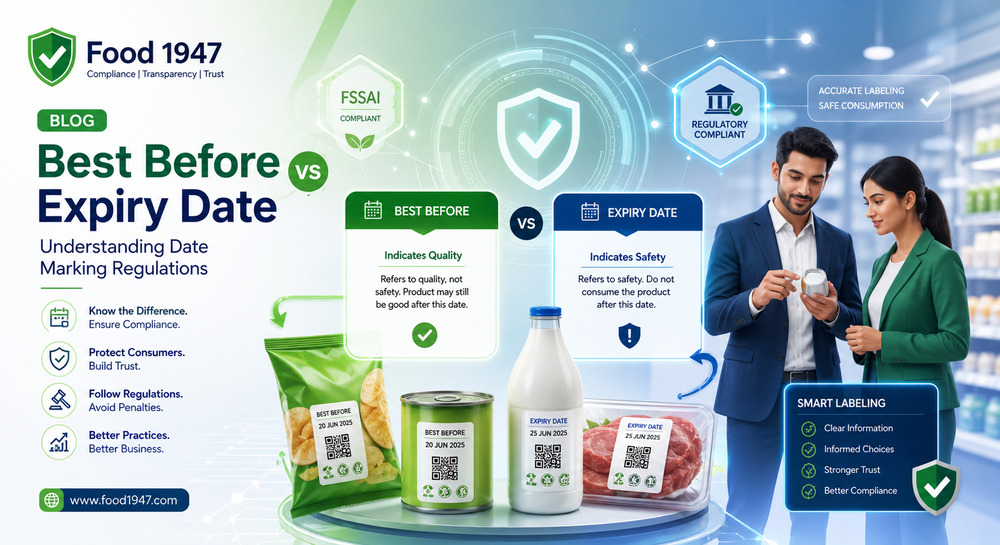
The distinction between "Best Before" and "Expiry Date" (or "Use By") has never been more critical than in the 2026 Indian food industry. While "Best Before" denotes the period where the food remains at its peak quality, "Expiry Date" is a hard safety threshold. This impacts the industry by necessitating more rigorous shelf-life studies, particularly for high-risk perishables. FSSAI’s role is to protect the public by mandating "Use By" dates for products that can support pathogenic growth, ensuring that no consumer consumes a safety-critical item past its prime. The industry helps business operators by providing standardized protocols for stability testing, ensuring that quality products reach the customer without ambiguity. Key stakeholders include QA/QC managers, retailers, and consumer advocacy groups. Compliance ensures that brands avoid the legal repercussions of selling unsafe products, which in 2026 can lead to non-bailable offenses under the new FSSAI amendments. Industry advice is to never treat these dates as interchangeable; "Best Before" is a promise of taste, while "Expiry" is a promise of safety. By prioritizing clear date marking on the Principal Display Panel, business operators can enhance customer trust and reduce food waste by educating consumers on the difference. Compliance in 2026 is about scientific precision, not guesswork, and manufacturers are advised to use accelerated stability testing to justify every date printed on their packaging.
Regulatory Mandates for High-Risk Perishables and Safety Dates
In 2026, FSSAI has intensified its focus on "Use By" dates for products like milk, fresh meat, and ready-to-eat meals. This impacts the Indian food industry by raising the stakes for cold chain integrity and manufacturing hygiene. FSSAI’s role is to ensure the public is not exposed to foodborne illnesses by strictly enforcing the prohibition of sales past the "Use By" date. The industry helps business operators by establishing guidelines for the "Zero-Tolerance" policy on date alterations, providing training for retail staff to identify and pull near-expiry stock. Key stakeholders include dairy units, meat processors, and logistical partners. Additional insights for 2026 suggest that FSSAI now requires digital logs of shelf-life testing for any product with a life of less than 30 days. Industry advice focuses on implementing FEFO (First-Expired-First-Out) inventory management systems to minimize waste. Compliance with these safety dates is a non-negotiable hallmark of a quality-driven food business. Business operators are further advised to use "Smart Labels" that change color if the temperature is breached, further ensuring the integrity of the safety date for the final customer. Protecting the public through accurate date marking is the primary responsibility of every FBO in the modern Indian market.
Scientific Shelf-Life Stability Testing Requirements
Claiming a shelf life in 2026 is no longer a matter of historical precedent; it requires validated scientific data. This impacts the industry by professionalizing the role of food testing labs, which are now required to provide "Shelf-Life Validation Certificates" for FSSAI audits. FSSAI’s role is to ensure these tests are conducted under realistic Indian environmental conditions (temperature and humidity), protecting the public from products that may degrade faster than labeled. The industry helps business operators by developing standardized testing modules for nutraceuticals, where vitamin potency can drop over time. Key stakeholders include R&D scientists, lab technicians, and regulatory affairs specialists. An additional insight for 2026 is that FSSAI requires a "Re-validation" of shelf life if the packaging material or formulation is changed even slightly. Advice to the food industry centers on conducting "Real-Time Stability Studies" alongside accelerated ones to provide a safety margin for date marking. Compliance in this technical domain is essential for product quality and legal protection. Manufacturers are advised to maintain these test records for at least one year after the product's expiry to safeguard against future litigation or consumer grievances.
Supply Chain Efficiency and the Freshness Mandate
The 2026 date marking regulations have transformed the Indian supply chain into a highly efficient, data-driven machine. This impacts the industry by reducing the average time a product spends in transit, thereby maximizing the "freshness window" for the consumer. FSSAI’s role is to oversee the entire chain through the FoSCoS portal, ensuring that distributors and warehouse operators are as accountable as the manufacturers. This helps the public by ensuring that the "Best Before" date isn't half-gone by the time the product hits the retail shelf. The industry helps business operators by providing automated tracking systems that alert them when stock is nearing its 30% remaining life. Key stakeholders include warehouse managers, e-commerce aggregators, and third-party logistics (3PL) providers. Additional insights for 2026 highlight the new requirement for "Date of Manufacture" to be visible even on secondary and tertiary packaging. Industry advice is to collaborate closely with retailers to ensure that "Old Stock" is never pushed to the front of the shelf. Compliance with supply chain date marking is vital for maintaining the reputation of the food industry. By prioritizing freshness, business operators can command a premium in the market and reduce the massive economic losses associated with expired stock.
Consumer Education and Date Interpretation Strategies
One of the biggest hurdles in 2026 is the public's confusion between "Best Before" and "Expiry," which leads to unnecessary food waste. This impacts the industry by creating "return-heavy" retail environments. FSSAI’s role is to lead public awareness campaigns, explaining that "Best Before" is about quality, not safety. The industry helps business operators by providing "Educational Icons" on labels that simplify these terms for the average consumer. Key stakeholders include consumer advocacy groups, retail associations, and brand managers. An additional insight for 2026 is the use of QR codes—as per FSSAI's latest advisory—to provide detailed "How to Store" videos that extend the product's life. Industry advice is to use bold, clear fonts for date marking, avoiding the common mistake of printing dates on crinkled or dark parts of the packaging. Compliance is not just a legal checkbox; it's an opportunity to educate the customer and build a more sustainable food ecosystem. Business operators are encouraged to be proactive in their communication, ensuring that "safety first" is the clear message behind every date mark. By reducing confusion, the food industry can help the Indian public make smarter, safer, and more sustainable consumption choices.
Legal Penalties and Regulatory Risks of Improper Marking
The legal landscape for food labeling in 2026 is fraught with risks for non-compliant operators. FSSAI has implemented a "Zero Tolerance" policy for the alteration or overlapping of dates on packages, with penalties reaching into lakhs of rupees. This impacts the industry by making compliance a boardroom priority rather than just a production task. FSSAI’s role is to act as a vigilant regulator, conducting surprise inspections and sampling to ensure that the public is not exposed to mislabeled or expired goods. This helps business operators by providing a level playing field where honest manufacturers are not undercut by those selling old stock. Key stakeholders include legal advisors, food safety officers (FSOs), and regulatory consultants. An additional insight for 2026 is the emergence of "Traceability Audits," where FSSAI traces a product back from the retail shelf to the raw material batch to verify date accuracy. Advice to the food industry is to maintain meticulous records of all stability tests and batch logs for a minimum of one year after the expiry date. Furthermore, operators should be aware that "misleading" a consumer about the shelf life of a product can lead to "Unfair Trade Practice" charges under consumer protection laws. In this high-stakes environment, staying ahead of the 2026 FSSAI circulars is the only way to navigate the complex legal waters of modern food labeling.
Mastering Date Marking for Food Safety Excellence
In conclusion, mastering the nuances of Best Before and Expiry Date marking is essential for any food business operator in 2026. FSSAI’s stringent guidelines are designed to protect public health and reduce food waste, but they require a sophisticated understanding of shelf-life science and regulatory law. Compliance is the foundation of consumer trust and brand longevity in the competitive Indian market. By prioritizing accurate date marking and seeking professional guidance, businesses can navigate the complexities of the 2026 food industry with confidence. Protecting the public is not just a regulatory mandate; it is the hallmark of a successful and ethical food brand.