Regional Reach: The Multi-Lingual Mandate of 2026
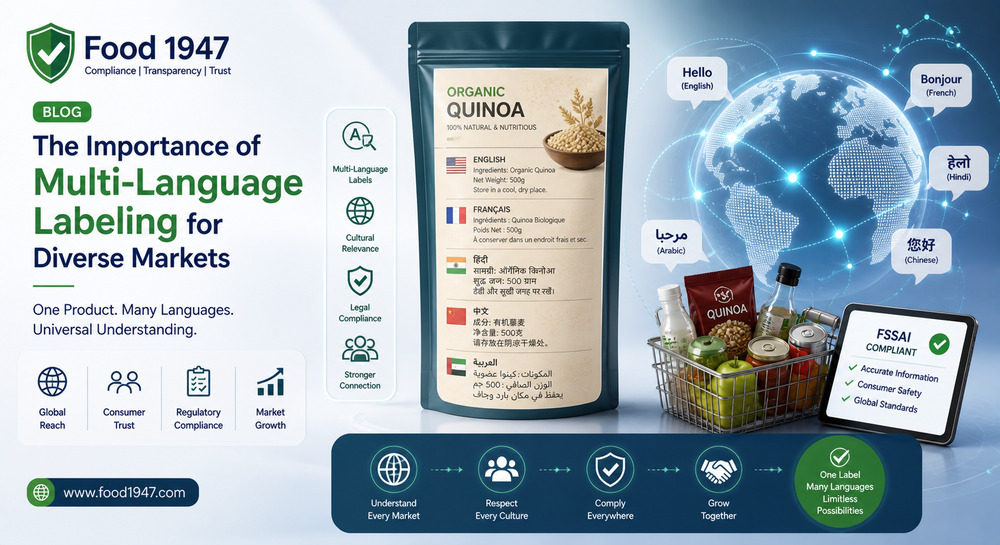
In 2026, India’s linguistic diversity is a primary consideration in food safety regulations. FSSAI has increasingly emphasized that food labeling should not just be in English or Hindi, but in the regional language of the state where the product is sold. This impacts the Indian food industry by necessitating "State-Specific" or "Multi-Language" packaging for localized marketing. FSSAI’s role is to ensure that the public, regardless of their proficiency in English, can understand what they are consuming. The industry helps business operators by providing translation services that are verified for technical accuracy, ensuring that ingredient names are correctly interpreted in languages like Tamil, Telugu, Marathi, or Bengali. Key stakeholders include regional distributors, translation experts, and linguistic consultants. Compliance in 2026 is about inclusivity—ensuring that every Indian citizen has an equal right to food safety information. Industry advice is to use the "Main Language Rule," where the regional language is given equal prominence to English or Hindi on the display panel. By embracing multi-language labeling, business operators can tap into rural markets more effectively and build deeper trust with local communities.
Standardizing Technical Terms Across 22 Languages
One of the biggest challenges in 2026 is the standardization of technical food terms across India’s 22 official languages. This impacts the industry by creating a need for a "Unified Technical Lexicon" to prevent confusion. FSSAI’s role is to publish glossaries that define how terms like "Preservatives," "Nutraceuticals," and "Allergens" should be translated. This serves the public by preventing misleading or vague local translations that could hide safety risks. The industry helps business operators by incorporating these standardized terms into automated labeling software. Key stakeholders include linguistic R&D departments and the FSSAI scientific committee. An additional insight for 2026 is the emergence of "Regional QR Labels," where a scan allows the consumer to choose their preferred language for the digital label. Industry advice is to prioritize the translation of the "Warning" and "Instructions for Use" sections first. Compliance ensures that brands are not penalized for "linguistic ambiguity," which is a growing area of consumer complaints. Accurate regional labeling is a hallmark of a professional and culturally sensitive food business in 2026.
State-Specific Labeling vs. National Packaging
Manufacturers in 2026 face a strategic choice: one national label in English/Hindi or multiple regional labels. This impacts the industry's supply chain and inventory costs, but localized labels often lead to higher sales in non-Hindi speaking states. FSSAI’s role is to provide a flexible framework that allows for either "over-stickering" for regional markets or integrated multi-language designs. The industry helps business operators by developing "Modular Label Designs" that allow language panels to be swapped easily without changing the entire brand identity. Key stakeholders include supply chain managers and packaging designers. An additional insight for 2026 is that several South Indian states have issued advisories for mandatory regional language labeling on high-consumption items like staples and milk. Industry advice focuses on a "Zonal Distribution Model," where stock is packaged specifically for the language of that zone. Compliance with regional expectations is increasingly becoming a prerequisite for shelf space in large retail chains across diverse Indian cities. Mastering the balance between national branding and local language is the key to 2026 market dominance.
Consumer Psychology and the Trust of the Mother Tongue
In the 2026 market, consumer behavior studies show a clear preference for products labeled in the consumer's native language. This impacts the industry by turning a "regulatory burden" into a powerful marketing tool. FSSAI’s role in this transition is to facilitate clear communication that empowers the public to make healthier choices. The industry helps business operators by conducting "Consumer Perception Audits" on translated labels to ensure the tone is appropriate and trustworthy. Key stakeholders include marketing psychologists and regional brand ambassadors. An additional insight for 2026 is that "Clean Label" claims (like No MSG or No Added Sugar) have a 40% higher impact when written in the local language. Industry advice is to use the regional language not just for the mandatory data but for the "Brand Story" as well. Compliance with multi-language norms is thus a double-edged benefit: it satisfies the regulator and delights the customer. In a market as diverse as India, speaking the customer's language is the ultimate form of transparency and service.
Legal Risks of Mistranslation and Regulatory Over-reaching
The legal stakes for mistranslated food labels in 2026 are exceptionally high. A wrong translation of an allergen or a health claim can lead to "Misbranded Food" charges under FSSAI Law. This impacts the industry by requiring a "Dual-Verification" process for every language on the pack. FSSAI’s role is to enforce the accuracy of these translations, ensuring the public is not endangered by linguistic errors. The industry helps business operators by providing legal vetting of translated content. Key stakeholders include regulatory lawyers and certified translators. An additional insight for 2026 is that FSSAI has started using "Language Audit Teams" during regional inspections to verify that the local text matches the English original. Advice to the food industry is to never rely on free online translation tools for mandatory declarations. Compliance requires a professional touch to ensure that "Fortified with Iron" doesn't accidentally become something else in a local dialect. In 2026, a brand’s legal safety is tied directly to its linguistic precision.
Future Trends: AI-Driven Real-Time Translation via QR
As we look beyond 2026, the future of multi-language labeling lies in AI-driven real-time translation. This impacts the industry by potentially reducing the physical text on the pack in favor of a "Language-Aware QR Code." FSSAI’s role is to provide the regulatory sandboxes for these technologies, ensuring they meet the "Right to Information" standards for the public. The industry helps business operators by developing "Smart Labels" that automatically detect the user's phone language and display the label accordingly. Key stakeholders include tech startups and digital compliance officers. An additional insight for 2026 is the FSSAI's "Digital First" advisory, which encourages the use of these dynamic language solutions. Industry advice is to start building a digital "Language Library" for all product portfolios now. Compliance in the future will be about accessibility in every sense of the word, and those who lead in digital translation will set the standard for the entire Indian food industry. The 2026 QR code is the bridge to a multi-lingual, safe, and transparent food future for all of India.
Building a Truly Inclusive National Food Brand
In conclusion, multi-language labeling is not just a regulatory mandate in 2026; it is a vital strategy for inclusion and trust in the Indian food industry. FSSAI’s push for regional clarity ensures that safety information reaches every corner of the country, protecting the public and empowering consumers. For business operators, the challenge of multi-lingual packaging is an opportunity to lead with empathy and transparency. By prioritizing accurate regional translations and seeking professional guidance, you can build a brand that is respected and understood across all of India’s diverse cultures. Compliance is the language of trust, and in 2026, it is the only way to ensure your business grows in harmony with the needs of the Indian people.