The Global Gatekeeper: FSSAI Import Regulations in 2026
In 2026, the entry of foreign food products into the Indian market is governed by a robust and digital-first FSSAI Import ecosystem. This impacts the international food industry by requiring strict alignment with Indian standards even before the goods leave the country of origin. FSSAI’s role is to act as the primary gatekeeper, ensuring that the public is protected from substandard or mislabeled global products. The industry helps business operators—both importers and foreign manufacturers—by providing a clear roadmap of the "Pre-Arrival" and "Post-Arrival" compliance checks. Key stakeholders include Custom House Agents (CHAs), FSSAI Authorized Officers (AOs), and international logistics partners. Compliance in 2026 necessitates a "Central Import License" and a detailed understanding of the Food Safety and Standards (Import) Regulations. Industry advice is to conduct a "Shadow Audit" of labels before shipment to identify potential red flags. By prioritizing compliance at the source, importers can avoid the massive costs of demurrage and product rejection at Indian ports. Protecting the public through global safety standards is a core mission, and the 2026 import framework is more vigilant than ever.
Rectifiable vs. Non-Rectifiable Labeling Errors
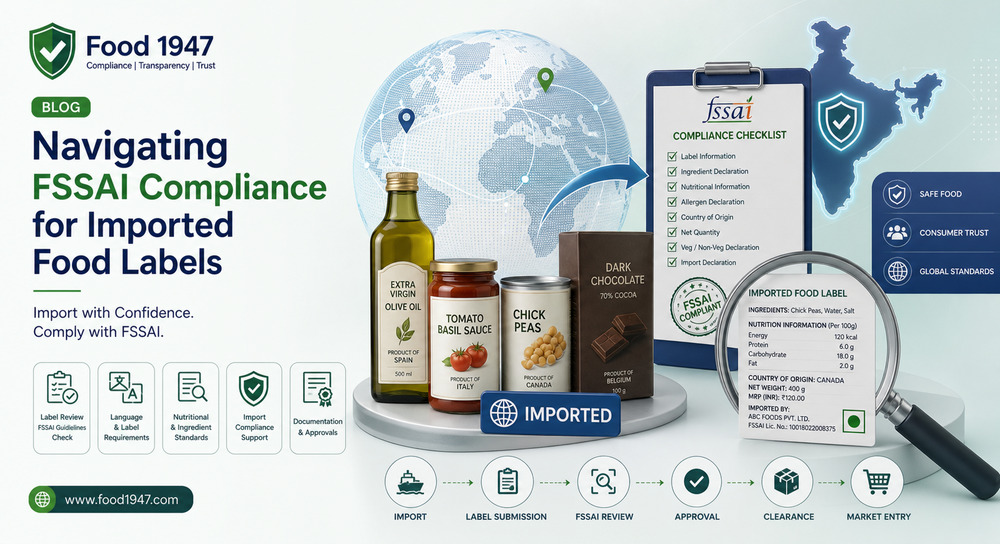
A critical concept in 2026 FSSAI import compliance is the distinction between errors that can be fixed at the port and those that cannot. This impacts the industry by determining whether a shipment can be "saved" or must be re-exported. FSSAI’s role is to allow for minor corrections—like the addition of the FSSAI logo or the importer's name—via "Over-stickering" in a Customs Bonded Warehouse. However, non-rectifiable errors, such as missing shelf life or incorrect ingredient lists, are fatal to the shipment. The industry helps business operators by providing "Rectification Support," ensuring that stickers meet the 2026 technical standards for font size and legibility. Key stakeholders include warehouse operators and labeling services. An additional insight for 2026 is that the "Veg/Non-Veg" symbol and "Fortification" icons are now strictly non-rectifiable if missing from the original print. Industry advice is to treat the original label as "Final," using the rectification process only as a last resort for dynamic info like the importer's details. Compliance requires a "Right First Time" approach to avoid the complexities of port-side labeling.
The Role of the Central License and FoSCoS Import Portal
The 2026 FSSAI import process is fully integrated into the FoSCoS portal, requiring every importer to hold a valid Central License. This impacts the industry by centralizing all import data, making it easier for FSSAI to track the history and safety record of every business operator. FSSAI’s role is to provide a transparent, digital interface for application, fee payment, and inspection scheduling. This serves the public by ensuring that only verified and accountable importers are bringing food into the country. The industry helps business operators by providing "FoSCoS Management Services," ensuring that licenses are updated and compliant with the latest 2026 categories. Key stakeholders include regulatory consultants and IT support teams. An additional insight for 2026 is the mandatory "Product Categorization" rule, where the importer must match the foreign product to the exact FSSAI Food Category System (FCS) code. Industry advice is to double-check these codes, as a mismatch can lead to a "Sampling Failure" during the lab testing phase. Compliance in the digital age means being as proficient in the portal as you are in the warehouse.
Sampling, Testing, and the "No-NOC" Risk in 2026
Every imported food shipment in 2026 must undergo sampling and laboratory testing before a "No Objection Certificate" (NOC) is issued. This impacts the industry by adding a "Safety Lead Time" to the supply chain. FSSAI’s role is to ensure that the public is not exposed to contaminants, pesticides, or unauthorized additives that may be legal in the country of origin but are banned in India. The industry helps business operators by providing "Pre-Import Testing" in FSSAI-notified labs abroad to ensure the product will pass Indian standards. Key stakeholders include food analysts, port authorities, and lab managers. An additional insight for 2026 is the use of "Rapid Testing Kits" at ports for high-risk items like perishables and oils, significantly speeding up the NOC process for compliant importers. Industry advice is to maintain a "Safety Dossier" for every product, including CoA (Certificate of Analysis) from the foreign manufacturer. Compliance is the only path to the NOC, and without it, a shipment is legally "non-existent" in the Indian market. In 2026, safety testing is the ultimate filter for global food trade.
Labeling for Special Categories: Nutraceuticals and Supplements
Importing nutraceuticals and health supplements in 2026 carries the highest level of regulatory scrutiny. This impacts the industry by requiring labels that comply with both the Import Regulations and the specific 2026 Nutraceutical Regulations. FSSAI’s role is to ensure that "Health Claims" and "Vitamins/Minerals" levels are strictly within the permissible Indian RDA (Recommended Dietary Allowance). The industry helps business operators by providing "Formula Audits" to ensure that the foreign product's composition is legal in India. Key stakeholders include clinical nutritionists and regulatory specialists. An additional insight for 2026 is that FSSAI now requires a "QR Code" on all imported supplements that links to the original foreign manufacturer’s safety certificate. Industry advice is to pay special attention to the "Warning" statements, which must be exactly as per the FSSAI 2026 circulars. Compliance in this niche sector is a high-stakes endeavor where even a minor labeling error regarding a "specific health benefit" can lead to a permanent ban on the brand. For supplements, the label is the product, and its compliance is the key to Indian market entry.
Post-Market Surveillance and Importer Accountability
Even after a product clears the port and receives an NOC, the importer's responsibility continues in 2026. This impacts the industry by making "Post-Market Surveillance" (PMS) a permanent risk factor. FSSAI’s role is to conduct surprise market sampling to ensure that the product on the retail shelf matches the one that was cleared at the port. This protects the public from "Bait and Switch" tactics or degradation during domestic storage. The industry helps business operators by providing "Mock Audits" and shelf-life monitoring services. Key stakeholders include Food Safety Officers (FSOs) and retail auditors. An additional insight for 2026 is that the importer is now legally liable for any safety failures found in the market, regardless of the manufacturer's location. Advice to the food industry centers on maintaining a "Batch-Wise Recall Plan" that can be activated instantly if a PMS sample fails. Compliance is a continuous commitment that extends from the port of entry to the consumer's plate. In the 2026 Indian food industry, the importer is the primary custodian of a global brand’s safety and reputation.
Global Excellence, Local Compliance: The Import Standard
In conclusion, navigating FSSAI compliance for imported food labels in 2026 requires a sophisticated understanding of both international trade and Indian food law. FSSAI’s rigorous standards for safety, sampling, and labeling are designed to ensure that the Indian public enjoys the best the world has to offer without compromising on safety. For business operators, compliance is the foundation of a sustainable import strategy. By seeking professional guidance and prioritizing "Right First Time" labeling, you can unlock the massive potential of the Indian market while building a reputation for quality and integrity. Compliance is the passport to success in the globalized food industry of 2026, and excellence in labeling is your first step across the border.