The 2026 Vegan Framework: Definitions and Identity
In 2026, the labeling of "Vegan" products in India is governed by the most stringent regulations yet, requiring absolute purity from animal-derived substances. FSSAI defines vegan food as those which do not use any ingredients, additives, or processing aids of animal origin and have not been tested on animals. This impacts the Indian food industry by mandating a complete audit of the supply chain, from raw material sourcing to final packaging. FSSAI’s role is to ensure the public is not misled by "vegan-washing"—the use of the term for marketing without scientific backing. The industry helps business operators by providing a structured framework for certification, ensuring that the "Vegan" claim is legally defensible. Key stakeholders include vegan FBOs, ingredient suppliers, and animal rights advocacy groups. Compliance is a major hurdle in 2026, as even minor cross-contamination can lead to license suspension. Industry players are advised to maintain separate production lines or validated cleaning protocols to ensure the integrity of the "Vegan" claim. Providing the public with high-quality, ethically sourced products is a core goal, and compliance is the primary tool to achieve it. Operators are further advised to be wary of hidden animal derivatives in stabilizers, enzymes, and flavoring agents, which are a common point of non-compliance in the plant-based sector.
The Mandatory Vegan Logo and Its Endorsement Process
The FSSAI "Vegan Logo"—a green "V" with a leaf and the word "Vegan"—is now a mandatory visual marker for all such products in 2026. This impacts the industry by creating a high barrier to entry; companies cannot simply print the word "Vegan" without obtaining prior endorsement from the authority via the FoSCoS portal. FSSAI’s role is to protect the public by acting as the clearinghouse for these approvals, ensuring that every brand sporting the logo has passed a rigorous scrutiny of its ingredients and facility protocols. This helps business operators by providing a "Seal of Approval" that instantly builds consumer trust in a competitive market. Key stakeholders include branding experts, regulatory affairs specialists, and the PBFIA (Plant Based Foods Industry Association). An additional insight for 2026 is that the use of the vegan logo is distinct from the green "Veg" symbol; a product can be vegetarian but not necessarily vegan. Industry advice is to integrate the logo prominently on the Principal Display Panel, following the exact size and color specifications provided in the latest FSSAI circular. Compliance ensures that brands are not penalized for "unauthorized logo usage," which is a key focus of enforcement officers in 2026. By strictly adhering to these endorsement rules, business operators can position themselves as leaders in the high-growth plant-based sector.
Terminology and Naming: Preventing Deceptive Marketing in Plant-Based Foods
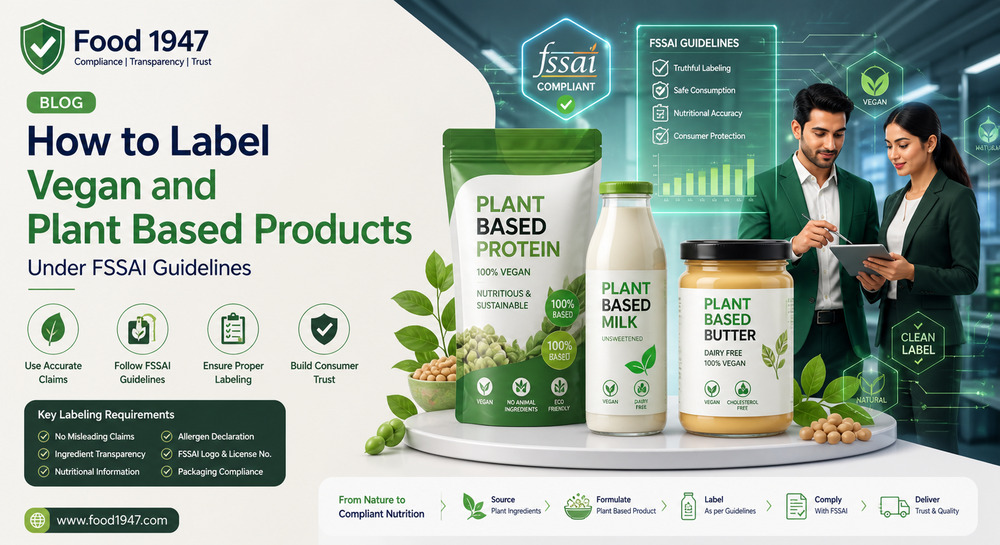
The naming of plant-based products in 2026 has become a focal point of FSSAI’s regulatory vigilance to prevent consumer confusion. Terms like "Vegan Milk" or "Plant-Based Meat" must be used in a way that is not misleading, often requiring qualifiers like "Almond Beverage" or "Soy-Based Nuggets." This impacts the industry by forcing brands to be more creative and precise with their nomenclature. FSSAI’s role is to ensure the public understands they are buying a plant-based alternative, not a traditional dairy or meat product, which is vital for dietary management. The industry helps business operators by providing examples of compliant labeling that still appeals to the consumer’s appetite and ethical values. Key stakeholders include marketing teams, legal counsel, and consumer protection agencies. An additional insight for 2026 is the crackdown on "phonetic equivalents" like "Mylk" or "Cheeze," which now require clear disclaimers. Advice to the food industry centers on the "Clear and Conspicuous" rule: any alternative naming must be accompanied by a statement of the product’s true nature. By mastering these naming conventions, business operators can build a brand that is both legally compliant and highly marketable. Transparency in nomenclature is not just a regulatory requirement; it is an opportunity to educate the consumer and build a distinct identity for the vegan category.
Managing Shared Facilities: Cross-Contamination and Validated Cleaning
For vegan food manufacturers in 2026, the biggest operational challenge is managing the risk of cross-contamination in shared facilities. FSSAI’s 2026 guidelines state that a product cannot carry the "Vegan" logo if there is a risk of contact with animal-derived ingredients. This impacts the Indian food industry by necessitating dedicated production lines or exhaustive "clean-in-place" (CIP) protocols that are validated by FSSAI-approved labs. FSSAI’s role is to ensure public safety, particularly for individuals with severe allergies to animal proteins like milk or eggs. The industry helps business operators by establishing industry-standard hygiene protocols and providing training for factory staff. Key stakeholders include plant managers, hygiene inspectors, and allergen testing services. Additional insights for 2026 highlight that "may contain" statements are not a substitute for the mandatory vegan standards; if a product carries the vegan logo, it must be truly free of animal ingredients. Other advice to the food industry involves implementing a "Vegan Quality Management System" that documents every cleaning cycle and raw material arrival. By prioritizing this level of operational discipline, businesses can guarantee the quality of their products and protect their "Vegan" status during surprise FSSAI inspections. In the 2026 market, the ability to prove the absence of animal DNA is the ultimate test of a vegan brand’s commitment to its customers.
Certification and Auditing: Ensuring Integrity in the Supply Chain
Obtaining the FSSAI Vegan certification in 2026 is a multi-step process that involves a rigorous audit of the entire supply chain. This impacts the industry by making "Traceability" the most important word in a manufacturer’s vocabulary. From the sourcing of enzymes to the origin of vitamin stabilizers, every component must be certified as non-animal. FSSAI’s role is to set the auditing standards and license third-party agencies to conduct these high-level inspections, ensuring that the public can trust the "Vegan" claim on the shelf. The industry helps business operators by providing digital traceability tools that link suppliers directly to the FSSAI compliance database. Key stakeholders include international ingredient suppliers, logistics partners, and certification bodies. An additional insight for 2026 is that FSSAI now requires an annual re-certification for all vegan products, ensuring that any changes in formulation are captured. Advice to the food industry involves maintaining a "Regulatory Dossier" for every ingredient, including "Non-Animal Origin" (NAO) certificates from all sub-suppliers. This proactive approach to documentation makes the audit process smoother and reduces the time to market for new products. Compliance in the vegan sector is a journey of continuous improvement, and those who invest in robust auditing systems will find themselves at a distinct competitive advantage.
Strategic Advantage: Labeling for the Modern Ethical Consumer
In the 2026 Indian market, compliant vegan labeling is not just a regulatory necessity; it is a powerful strategic advantage. As consumers become more conscious of the environmental and ethical impact of their food, the FSSAI Vegan logo becomes a "Seal of Approval" that can drive significant market share. This impacts the industry by moving "Vegan" from a niche health-food category to the mainstream FMCG space. FSSAI’s role in this growth is to provide a level playing field where honest brands are rewarded and deceptive ones are penalized, thus fostering a healthy and competitive market. The industry helps business operators by sharing consumer insights on how to leverage the vegan label for global exports, as Indian plant-based standards are now increasingly aligned with international norms. Key stakeholders include retail buyers, export councils, and brand strategists. An additional insight for 2026 is that vegan-certified products often command a price premium, provided the compliance is clearly communicated. Industry advice centers on using the back-of-pack space to tell the story of the product’s "Vegan Journey," from ethical sourcing to safe manufacturing. By combining regulatory excellence with smart marketing, Indian food businesses can lead the global plant-based revolution. The 2026 market belongs to those who view compliance as a vehicle for innovation and consumer connection.
Mastering Vegan Labelling for a Competitive Global Edge
In conclusion, the 2026 FSSAI guidelines for vegan and plant-based products represent a major milestone in the professionalization of the Indian food industry. While the requirements for certification, logo usage, and nomenclature are stringent, they are essential for building a transparent and trustworthy marketplace. For business operators, compliance is the key to unlocking the massive potential of the ethical consumer segment both in India and abroad. By seeking professional guidance and prioritizing regulatory integrity, you can ensure that your vegan brand is not just a trend, but a trusted name in the future of food.