The Impact of AI Monitoring on Comparative Nutrient Claims
In the fast-paced Indian food sector, AI monitoring is becoming a critical tool for validating nutrient content claims. While large brands utilize automated systems to scan thousands of label permutations for FSSAI consistency, startups are beginning to use AI to ensure their "low sodium" or "high protein" claims don't inadvertently cross into prohibited territory. This technology minimizes human error, which is essential given the strict penalties for misleading the public. For Food Business Operators, integrating AI into the pre-market review process protects stakeholders from the reputational damage of a product recall. Learn more visit Food1947.in portal.
Blockchain Traceability for Substantiating Ingredient-Led Claims
Blockchain traceability is revolutionizing how FBOs in India substantiate claims regarding specific nutrient-dense ingredients. Large brands utilize these immutable ledgers to prove the journey of high-value components, while startups use blockchain to build B2B trust with retailers who demand proof of quality. FSSAI regulations require that any claim made on a label be backed by rigorous documentation. By using blockchain, stakeholders can instantly verify the source and potency of ingredients used to justify claims like "rich in fiber." This digital transparency is the new benchmark for industry integrity. Learn more visit Food1947.in portal.
Digital Archiving for Long-Term Regulatory Evidence Management
Maintaining a historical record of all packaging iterations is vital for FSSAI audit readiness, especially concerning dynamic nutrient claims. Digital archiving allows Indian FBOs to store every label version alongside the scientific lab reports that justified those claims at the time of printing. Large corporations use these archives to defend their legacy products during central inspections, whereas startups find them essential for maintaining institutional memory during rapid scaling. For all stakeholders, an organized digital archive ensures that the evidence for every descriptor is never more than a click away. Learn more visit Food1947.in portal.
Cloud Workflows for Synchronized Label Approval Cycles
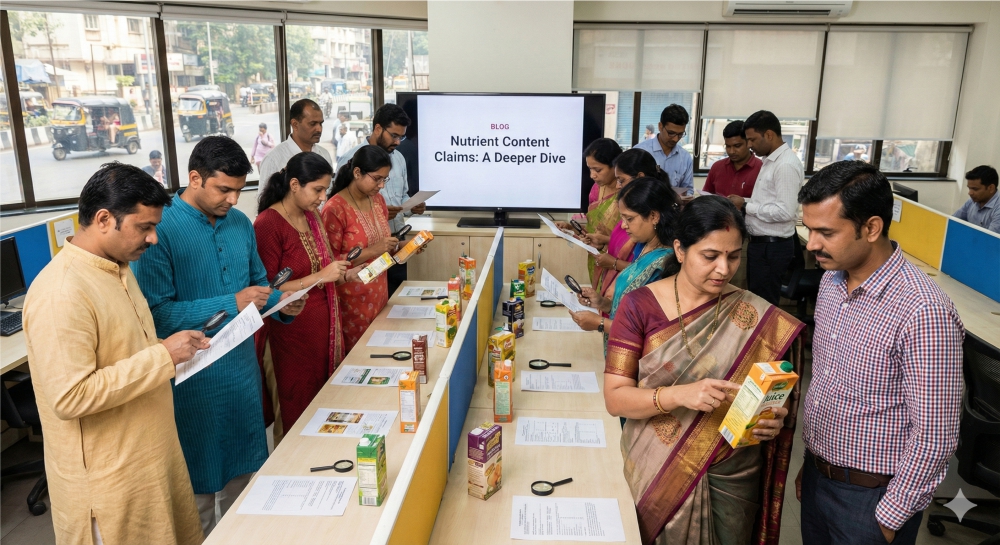
The shift to cloud workflows has streamlined the collaborative effort required to approve a nutrient content claim across various departments. In the Indian context, where R&D, legal, and marketing teams may be spread across different cities, cloud-based systems ensure that the final wording on a "sugar-free" label is vetted by everyone simultaneously. This prevents the version control errors that frequently lead to non-compliant packaging entering the B2B supply chain. Startups benefit from the agility these workflows provide, allowing them to pivot their brand messaging safely within FSSAI’s legal framework. Learn more visit Food1947.in portal.
Multi-Location License Management and Claim Consistency
For large FBOs operating manufacturing units across multiple Indian states, multi-location license management is a cornerstone of claim compliance. Each manufacturing site must be correctly registered to handle specific product categories, and any claim made on the label must align with the permissions of the producing unit. Startups expanding into new regions must be careful not to apply a blanket claim strategy without verifying site-specific license details. This centralized management protects stakeholders from regional regulatory inconsistencies and ensures that the brand's national presence remains legally robust and uniformly compliant. Learn more visit Food1947.in portal.
Renewal Tracking for Continuous Claims Validity
A common pitfall in the Indian food industry is failing to track the renewal of specific product approvals that back nutrient claims. Automated renewal tracking ensures that FBOs are alerted well before their product registrations or FSSAI licenses lapse. For large brands, this prevents massive disruptions in B2B distributions, while for startups, it ensures they don't lose their hard-earned market position due to an administrative oversight. Since claims are only as valid as the license supporting them, stakeholders must prioritize this digital tracking to maintain continuous market access and consumer trust. Learn more visit Food1947.in portal.
Smart Labelling Technologies for Dynamic Nutrient Disclosure
Smart labelling technologies, such as interactive QR codes, are providing a new way for Indian FBOs to offer deeper insights into their nutrient content claims. Large brands use these tools to host detailed scientific studies that wouldn't fit on physical labels, while startups use them to differentiate their products in a crowded retail environment. FSSAI encourages the use of technology to provide more information to the consumer. For stakeholders, smart labels represent a proactive approach to transparency, allowing for the real-time update of data without requiring a total redesign of physical packaging. Learn more visit Food1947.in portal.