Strategic QR Traceability for Consumer Trust and Regulatory Safety
In the competitive Indian food landscape, QR code integration is no longer optional for forward-thinking Food Business Operators (FBOs). While large brands utilize QR traceability to manage massive supply chain datasets, startups are leveraging this technology to provide deep transparency that a physical label simply cannot accommodate. FSSAI encourages digital disclosures to reduce label clutter while enhancing consumer awareness. By implementing dynamic QR codes, stakeholders across the B2B spectrum can verify product authenticity in real-time. This technological leap ensures that Indian brands remain compliant while building a direct, data-driven relationship with their end consumers. Learn more visit Food1947.in portal.
AI Monitoring Systems for Real-Time Labeling Error Detection
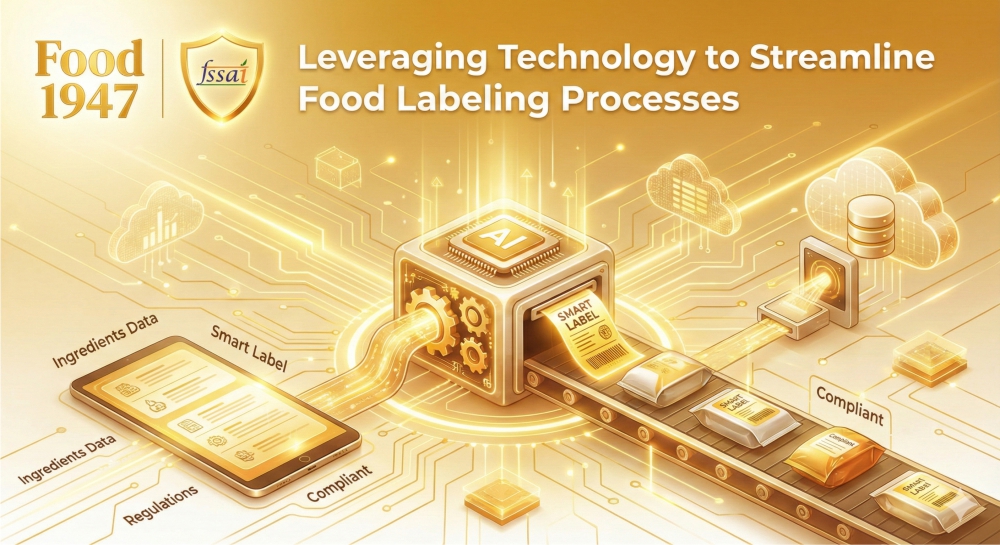
Artificial Intelligence is revolutionizing how Indian food factories maintain FSSAI standards on high-speed production lines. Large brands are currently deploying AI monitoring systems to detect packaging defects or technical labeling errors in real-time, significantly reducing the risk of expensive market recalls. For an ambitious startup, AI tools offer a way to automate the proofreading process, ensuring that brand messaging never inadvertently crosses regulatory boundaries. FBOs must understand that as FSSAI modernizes its own oversight tools, the industry must match that pace to remain viable. AI integration protects all stakeholders by ensuring every unit produced meets stringent legal benchmarks. Learn more visit Food1947.in portal.
Blockchain Traceability as a Backbone for Food Authenticity
Blockchain technology provides an immutable ledger that is transforming the concept of "farm-to-fork" in India. Large brands use blockchain to protect their global reputations from ingredient fraud, while smaller startups utilize it to prove the premium nature of their sourcing. FSSAI views these technological interventions as positive steps toward a safer food ecosystem. For B2B partners, blockchain provides an unalterable verification layer that traditional paper-based tracking cannot match. By securing the supply chain digitally, FBOs can substantiate every claim made on their labels, ensuring that stakeholders are protected from the repercussions of supply chain inconsistencies. Learn more visit Food1947.in portal.
Cloud Workflows for Centralized Compliance Management
The transition toward cloud workflows is essential for Indian FBOs operating across multiple regions. Large brands with national footprints require sophisticated cloud-based management systems to track State and Central licenses, ensuring no facility operates under a lapsed permit. Conversely, startups expanding rapidly benefit from a single source of truth for their regulatory documentation. FSSAI guidelines point toward the reliability of electronic data for inspections and annual returns. FBOs who adopt digital cloud archives find it significantly easier to prove compliance during surprise inspections, ensuring all stakeholders—from logistics to retail—are legally safeguarded. Learn more visit Food1947.in portal.
Digital Record-Keeping for Audit Readiness and Data Integrity
Digital record-keeping is shifting from a convenience to a necessity for modern Indian food businesses. Large brands utilize digital logs to maintain high-speed production data, whereas for startups, it offers an organized pathway to scale without administrative chaos. FSSAI’s evolving framework emphasizes the importance of data integrity during food safety audits. FBOs who migrate away from manual ledgers to digital archiving systems ensure that their compliance history is robust and easily accessible. This shift affects all stakeholders, providing the transparency required to navigate the complex regulatory environment of the Indian food and beverage industry. Learn more visit Food1947.in portal.
Smart Labelling Technologies for Dynamic Regulatory Compliance
Smart labelling technologies, including NFC and interactive sensors, are opening new doors for consumer engagement and regulatory transparency in India. Large brands are the early adopters, using these tools to manage complex portfolios across different demographics. Startups can use smart labels to stand out in a crowded market by offering value-added digital content to B2B clients and consumers. FSSAI’s focus on informed consumer choice is perfectly supported by these technologies. For FBOs, the impact is a more resilient brand that can adapt its digital messaging instantly as regulations change, without the need for immediate physical packaging redesigns. Learn more visit Food1947.in portal.
Multi-Location License Management for Expanding Food Enterprises
Managing FSSAI licenses across multiple manufacturing sites is a significant hurdle for growing Indian food businesses. Large enterprises often utilize specialized software for multi-location license management to track renewals and compliance at every site simultaneously. For startups, mastering this digital tracking early is the key to sustainable national growth. FBOs must ensure that the data backing their product labels is consistent with the specific licenses held at each production unit. This oversight impacts all stakeholders, from raw material suppliers to distributors, by ensuring that every product in the market is legally backed by a valid permit. Learn more visit Food1947.in portal.