The Dangers of Chemical Migration in Packaging
Understanding How to Reply to a Notice for Serving Food in Non-Compliant Containers begins with recognizing the invisible threat of chemical migration. The role of the FSSAI Food Notice Reply in this scenario is to rapidly address concerns that toxic substances—such as heavy metals or unapproved polymers—are leaching from the serving container directly into hot or acidic food. This impacts the Indian Food Notice Reply landscape by forcing restaurants, cloud kitchens, and FMCG brands to strictly audit the molecular safety of their primary packaging. Addressing this chemical threat helps business operators fiercely protect the quality of products, ensuring that an otherwise perfectly cooked meal is not toxically compromised the moment it is placed in a cheap, unverified takeaway box. Key stakeholders impacted include the packaging procurement teams, the restaurant managers, and the health-conscious consumers. Additional insights emphasize that authorities treat non-compliant containers as a severe public health violation akin to adulteration, as the container actively alters the chemical composition of the food. Other advice to operators drafting a Food Notice Reply is to immediately halt the use of the disputed serving material; your defense must focus on rapid material replacement and scientific verification rather than debating the aesthetics of the container.
Understanding Food-Grade Material Regulations
A critical technical step in How to Reply to a Notice for Serving Food in Non-Compliant Containers is mapping the law. The role of the FSSAI Food Notice Reply is to meticulously cross-reference your specific serving materials against the exhaustive lists of permitted food-grade plastics, papers, and metals outlined in the Food Safety and Standards (Packaging) Regulations. This impacts the food service industry by demanding that businesses possess a highly technical understanding of material safety standards, explicitly prohibiting the use of recycled plastics or newspaper for direct food contact. Understanding these regulations helps business operators definitively defend the intended quality of products, proving that their specific polyethylene or virgin craft paper is legally permitted for food contact. Key stakeholders impacted are the packaging technologists, the legal compliance drafters, and the reviewing adjudicators. Additional insights reveal that many notices are issued because a business utilized a perfectly safe material but failed to secure the mandatory "food-grade certificate" from the manufacturer. Other advice for your Food Notice Reply is to construct a precise table demonstrating your container's exact material composition, cross-referencing it directly with the corresponding IS (Indian Standard) number mandated by FSSAI, proving absolute statutory alignment.
Phasing Out Banned Single-Use Plastics
Environmental and health laws intersect heavily in How to Reply to a Notice for Serving Food in Non-Compliant Containers. The role of the FSSAI Food Notice Reply is often to navigate the complex, rapid phase-out of banned single-use plastics (SUPs) that were historically common in the food service sector. This impacts the restaurant and delivery ecosystem by forcing a massive, rapid transition to biodegradable, compostable, or legally approved recyclable alternatives. Phasing out banned plastics helps business operators secure the overarching quality of products and corporate reputation, demonstrating compliance with both FSSAI safety laws and national environmental directives. Key stakeholders impacted include the supply chain managers, the chief financial officers absorbing the higher cost of eco-friendly packaging, and the FSSAI nodal officers monitoring the phase-out timeline. Additional insights show that adjudicating officers are uncompromising regarding banned SUPs; pleading ignorance of the ban is an automatic failure. Other advice for drafting your Food Notice Reply is to explicitly state the date the banned material was completely eradicated from your premises, attaching the purchase orders for the newly acquired, fully compliant, FSSAI-approved biodegradable serving containers to prove the permanent shift in your operations.
Securing Migration Test Reports from Vendors
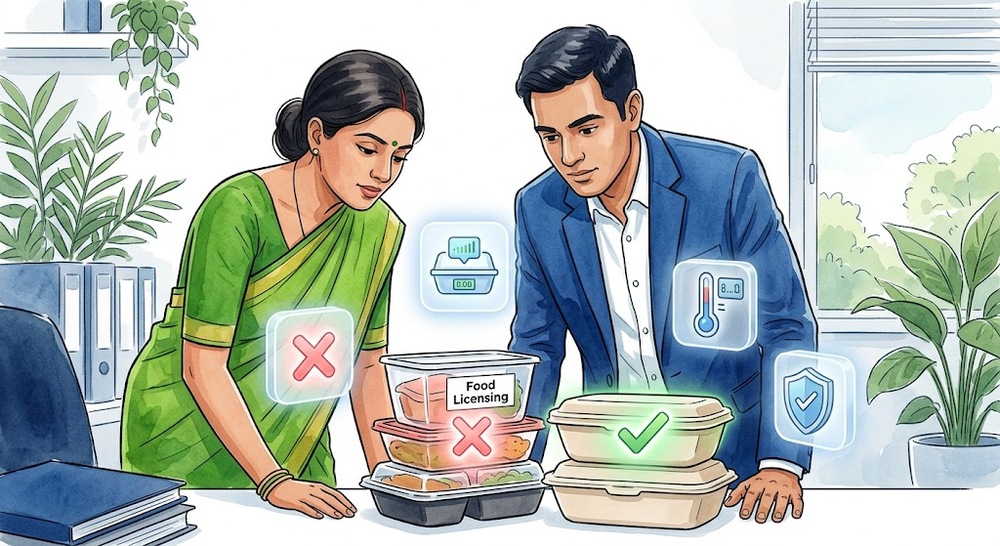
Science is your only shield when figuring out How to Reply to a Notice for Serving Food in Non-Compliant Containers. The role of the FSSAI Food Notice Reply is to present undeniable, NABL-accredited laboratory data—specifically overall and specific migration test reports—that conclusively prove the safety of the new or disputed container. This impacts the regulatory review process by shifting the dispute from an administrative argument to an analytical chemistry determination. Securing these reports helps business operators unequivocally prove the safety and quality of products, completely neutralizing the government's allegations of toxic leaching under extreme temperature or shelf-life stress. Key stakeholders impacted are the independent analytical chemists, the packaging vendors, and the FSSAI scientific authorities. Additional insights emphasize that submitting a generic letter from a supplier claiming the material is "safe" holds zero legal weight; adjudicators only accept accredited numerical migration data. Other advice when compiling your Food Notice Reply is to demand these NABL-accredited migration reports directly from your packaging supplier. Highlight the specific chemical parameters in the resulting report within your reply text to scientifically and legally destroy the authority's allegation.
Discarding Non-Compliant Serving Inventory
Logistical accountability is mandatory in How to Reply to a Notice for Serving Food in Non-Compliant Containers. The role of the FSSAI Food Notice Reply is to formally document the immediate physical quarantine and destruction of all unapproved serving containers currently in your inventory. This impacts the facility's bottom line by prioritizing public health compliance over the financial value of the stockpiled packaging. Discarding this inventory helps business operators protect the future quality of products by demonstrating that they will not knowingly allow legally deficient materials to ever touch consumer food again. Key stakeholders impacted include the warehouse managers, the facility owners taking the financial write-off, and the FSSAI enforcement officers monitoring the disposal. Additional insights show that adjudicating officers may grant leniency on the financial penalty if the business proves they voluntarily and successfully destroyed the non-compliant packaging before the government forced them to. Other advice for your Food Notice Reply is to outline the exact volume of packaging discarded, its secure quarantine location, and attach photographic evidence or waste-management receipts proving its physical destruction, showcasing your absolute submission to the Food Safety Act.
Establishing Strict Vendor Approval Checklists
Systemic prevention is the final resolution in How to Reply to a Notice for Serving Food in Non-Compliant Containers. The role of the concluding FSSAI Food Notice Reply is to assure the regulator that the business has instituted foolproof internal procurement protocols to prevent the purchase of unapproved containers ever again. This impacts corporate operations by forcing the implementation of strict Vendor Approval Standard Operating Procedures (SOPs). Establishing these checklists helps business operators permanently guarantee the safety and quality of products, ensuring that no packaging vendor is onboarded without first providing active FSSAI licenses, food-grade certificates, and NABL migration reports. Key stakeholders impacted are the procurement officers, external packaging partners, and the FSSAI nodal officers who demand structural upgrades. Additional insights highlight that the best defense against a packaging notice is proving that the error occurred despite a rigorous system, and that the system has since been massively tightened. Other advice following your Food Notice Reply is to attach a copy of your new mandatory vendor onboarding questionnaire, proving that any future supplier must clear intense regulatory hurdles before a single container enters your facility.
Partner with Experts for Material Compliance
To successfully survive the highly technical complexities of How to Reply to a Notice for Serving Food in Non-Compliant Containers, expert partnership is absolute. The role of specialized FSSAI legal consultants and packaging technologists in drafting this Food Notice Reply is to seamlessly blend complex materials science with aggressive administrative law defense. This impacts the industry by providing businesses with the highly technical translation required to defend packaging disputes without accidentally confessing to serving unsafe food. Expert intervention helps business operators focus entirely on culinary excellence and the quality of products while seasoned professionals battle the intricate chemical migration allegations with the adjudicator. Key stakeholders impacted include the highly protected corporate directors, the specialized compliance drafters, and the regulatory authorities who respect data-driven, scientifically accurate submissions. Additional insights emphasize that misinterpreting the FSSAI packaging schedules in your defense is a fatal error that leads to guaranteed heavy fines and license suspension. Our ultimate advice to operators facing a non-compliant container notice is to immediately partner with our expert Food Notice Reply service; we possess the precise scientific and legal expertise required to neutralize the threat and protect your right to operate safely.