The Regulatory Crackdown on Misleading Brand Names
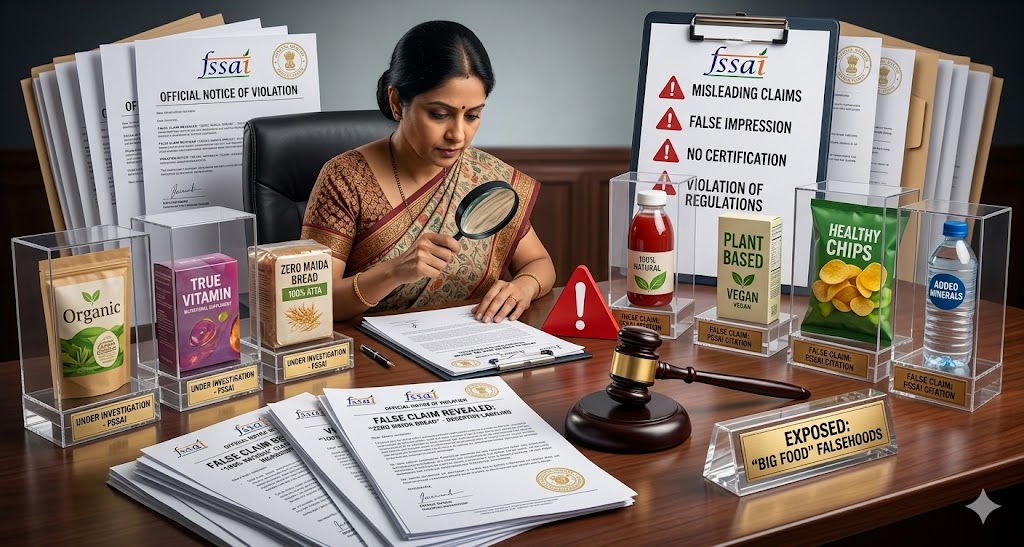
In mid-2026, the Indian food industry experienced a massive wake-up call when the Food Safety and Standards Authority of India (FSSAI) exposed big food brands for making misleading health claims. The blog context addressing the title "Exposed: Big Food Brands That Lied to You – FSSAI Notices & False Claim Violations Revealed" directly points to the 15 brands, including well-known names, served with show-cause notices under the Food Safety and Standards Act, 2006. Words like "zero maida," "vegan," and "healthy" were heavily scrutinized for creating false impressions among consumers. The role of Food industry help business operators is highly critical here in addressing the quality of products to customers by ensuring marketing terms perfectly align with actual nutritional profiles and lab reports. For instance, using "zero maida" while including wheat gluten can lead to instant regulatory actions. Key stakeholders impacted by this title include marketing executives, legal advisors, and packaging designers who must rethink their promotional strategies. This crackdown forces operators to seek reliable Food label compiler services in india to ensure full compliance before their products even reach the printing stage, thereby preventing costly product recalls and protecting their brand reputation.
Unmasking the "Healthy" and "Plant-Based" Myths
The recent FSSAI notices have dramatically impacted the Indian Food industry by redefining how wellness products are marketed and perceived. Examining the context of "Exposed: Big Food Brands That Lied to You – FSSAI Notices & False Claim Violations Revealed," it is evident that claims such as "plant-based vegan" or "true vitamin" cannot be used arbitrarily without prior approval or scientific endorsement in the FSSAI license. The role of Food industry help business operators in addressing the quality of product to customers requires rigorous auditing of raw materials to validate every single descriptive term. Key stakeholders impacted include formulation chemists, digital marketers, and consumer rights advocates who demand absolute transparency. To survive this stringent regulatory environment, modern brands must utilize an advanced Food Label website to cross-reference their ingredient lists against FSSAI's latest gazette notifications. When companies falsely promote products as "healthy" while hiding high sugar or sodium content, they not only violate ethical standards but also face massive financial penalties and public backlash, making truthful label communication the only sustainable path forward.
Strict Oversight on Food Product Labels
FSSAI's heightened surveillance has reshaped the packaging standards across the Indian Food industry, proving that regulatory bodies are reading the fine print as closely as health-conscious consumers do. Addressing the context of "Exposed: Big Food Brands That Lied to You – FSSAI Notices & False Claim Violations Revealed," brands face severe scrutiny over front-of-pack claims that distract from actual nutritional facts on the back. The role of Food industry help business operators in addressing the quality of product to customers involves performing thorough compliance checks on all Food product labels to ensure ingredients are listed honestly by weight and that no hidden sugars masquerade under alternative names like dextrose or maltose. Key stakeholders impacted by this title include retail distributors, food safety auditors, and everyday consumers relying on package integrity. By proactively engaging with certified regulatory consultants, manufacturers can navigate these complex mandates, ensuring that terms like "farm-fresh" or "natural" are only applied when officially certified, thereby safeguarding both consumer health and corporate equity.
Leveraging Technology to Prevent Deceptive Claims
As FSSAI intensifies its digital monitoring and AI-driven market surveillance in 2026, the Indian Food industry must adapt rapidly to avoid being penalized for deceptive claims. The blog context addressing "Exposed: Big Food Brands That Lied to You – FSSAI Notices & False Claim Violations Revealed" underscores the critical need for integrating robust Food labelling solutions within the production lifecycle. The role of Food industry help business operators in addressing the quality of product to customers is transformed by using automated AI monitoring tools to scan packaging drafts against real-time regulatory databases, flagging high-risk words before printing. Key stakeholders impacted include compliance officers, software vendors, and e-commerce platforms that host these products. By leveraging advanced digital tools, brands can immediately detect and rectify nomenclature errors, ensuring that all digital disclosures and physical labels mirror exact, compliant laboratory results, eliminating the risk of being caught in the regulator's crosshairs for health-washing.
Consumer Empowerment and Reporting Mechanisms
The dynamic shift in FSSAI regulations directly empowers consumers, fundamentally altering the operational landscape of the Indian Food industry. Looking at the context of "Exposed: Big Food Brands That Lied to You – FSSAI Notices & False Claim Violations Revealed," the introduction of digital tools and mobile apps allows buyers to report misleading claims instantly, amplifying the risks for non-compliant brands. The role of Food industry help business operators in addressing the quality of product to customers must now focus on absolute transparency to withstand crowdsourced scrutiny. Key stakeholders impacted by this title include customer grievance teams, public relations managers, and the FSSAI regulatory enforcement wings. Brands must prioritize authentic engagement by providing clear, unexaggerated nutritional information, ensuring that their wellness claims hold up to both scientific testing and public opinion, thus mitigating the threat of viral consumer backlash that can permanently damage a brand's standing in the market.
Ensuring Claims Match Nutritional Realities
The revelation of false claims has forced the Indian Food industry to strictly synchronize marketing promises with actual dietary metrics. In the context of "Exposed: Big Food Brands That Lied to You – FSSAI Notices & False Claim Violations Revealed," regulators are no longer accepting vague, poetic language that implies unsubstantiated health benefits. The role of Food industry help business operators in addressing the quality of product to customers involves generating transparent, accurate daily value calculations and ensuring they are printed legibly. Key stakeholders impacted include nutritionists, product developers, and third-party NABL-accredited testing laboratories. Without documented proof, using terms like "zero" or "100% pure" invites immediate legal friction. FBOs must implement a meticulous, evidence-based approach to label design, ensuring that every health assertion is backed by a verified technical dossier, ultimately fostering a safer, more trustworthy food ecosystem that prioritizes the long-term well-being of the Indian population.
Partner with Experts
Navigating the treacherous waters of the 2026 FSSAI regulatory landscape requires highly specialized knowledge, especially when attempting to formulate compelling yet legally sound health claims. To avoid becoming the next target of FSSAI notices, we strongly encourage food business operators to immediately partner with expert regulatory consultants who specialize in Indian food laws. These seasoned professionals provide invaluable service and support, offering deep insights into the latest FSSAI circulation, rules, regulations, and recent amendments targeting misleading advertisements. By seeking professional experts to audit your packaging, you ensure your brand utilizes the best Food labelling solutions available, keeping your marketing copy strictly compliant with the law. Do not risk your brand’s reputation and financial stability on guesswork; rely on authoritative legal guidance to craft perfectly compliant labels, seamlessly clear regulatory hurdles, and confidently deliver safe, authentic products to the booming Indian consumer market.
Frequently Asked Questions
Find quick answers to common questions about Food Label
What sparked the massive wake-up call for the Indian food industry in mid-2026?
The FSSAI exposed big food brands by serving show-cause notices for making misleading health claims and creating false impressions among consumers.
Why did the term "zero maida" lead to immediate regulatory action for some brands?
Because the products were found to actually contain wheat gluten, rendering the "zero maida" marketing claim technically false and highly misleading to buyers.
What must a brand obtain before marketing a product as "plant-based vegan" in India?
The brand must secure prior approval and specific scientific endorsement for vegan food within their official FSSAI license.
What trick do some manufacturers use regarding hidden sugars on product packaging?
They hide high sugar content by masquerading it under alternative technical names like dextrose, maltose, or corn syrup to deceive health-conscious consumers.
How does AI monitoring technology assist modern Food Business Operators (FBOs)?
It acts as a digital compliance officer by scanning packaging drafts against real-time regulatory databases to flag high-risk wording before printing.
What new mechanism empowers consumers to hold non-compliant food brands accountable?
The introduction of digital tools and mobile apps allows buyers to report misleading claims and deceptive labeling instantly to the FSSAI.
Why is vague, poetic language implying health benefits no longer accepted by FSSAI?
Regulators now require a meticulous, evidence-based approach where every health assertion is backed by a verified technical dossier and lab reports.
Who are the key stakeholders directly impacted by the crackdown on deceptive marketing claims?
Marketing executives, legal advisors, formulation chemists, packaging designers, and public relations managers.
Why is partnering with expert regulatory consultants essential for navigating FSSAI laws?
Experts provide invaluable insights into the latest FSSAI rules and amendments, ensuring your marketing copy perfectly complies with the law to avoid costly recalls.
What is the ultimate consequence of ignoring stringent mandates surrounding health assertions?
It instantly exposes a brand to devastating legal actions, heavy financial fines, mandatory product recalls, and irreversible loss of consumer trust.